
The Human Genome Project Was Declared Complete in 2003
A truly gap-free human genome sequence was only published in 2022.
 Topic
Topic8 facts
Unlock the secrets of DNA, the fundamental blueprint of life! Discover fascinating facts about genetics, heredity, and how DNA shapes every living organism.
A truly gap-free human genome sequence was only published in 2022.
The tiny remaining difference accounts for the variation between individuals.
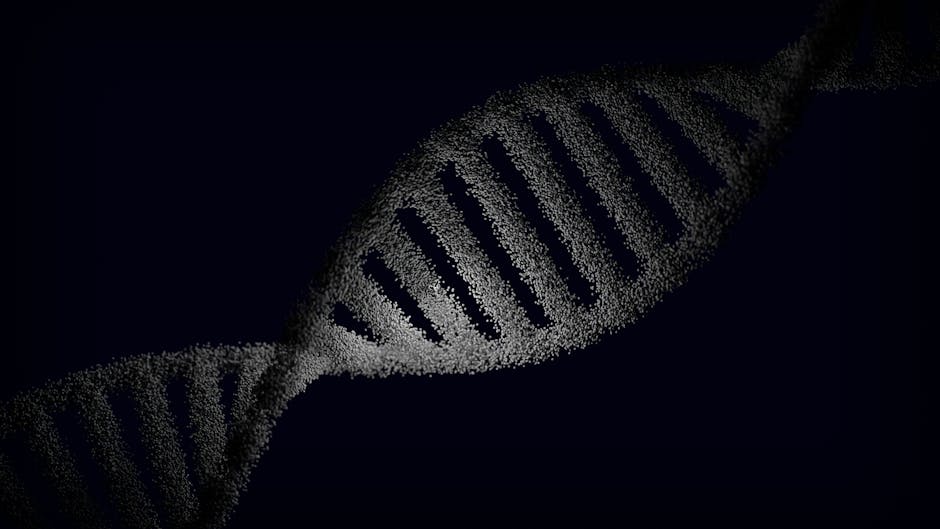
Adenine, thymine, cytosine and guanine pair up to form the rungs of the double helix.
That is roughly 3.1 billion of the chemical letters that make up a person's DNA.
Their model relied on X-ray images by Rosalind Franklin, and Watson, Crick and Maurice Wilkins won the Nobel Prize in 1962.
Every human cell nucleus contains about 3.2 billion base pairs of DNA, distributed across 46 chromosomes. If fully stretched out end to end, the DNA from a single cell would measure approximately 2 metres. With roughly 37 trillion cells in the human body, your total DNA — laid end to end — would reach from Earth to the sun and back about 600 times. Despite this length, DNA is packed into a nucleus only about 6 micrometres wide through extraordinary coiling and protein scaffolding.
While seemingly disparate, this shared genetic material reflects common ancestry and fundamental biological processes essential for life. Many genes involved in basic cellular functions are highly conserved across diverse species.
The human body contains trillions of cells, each with about 2 meters of DNA tightly packed. If all the DNA from a single human were uncoiled, it would stretch from the Earth to the Sun and back over 600 times.