
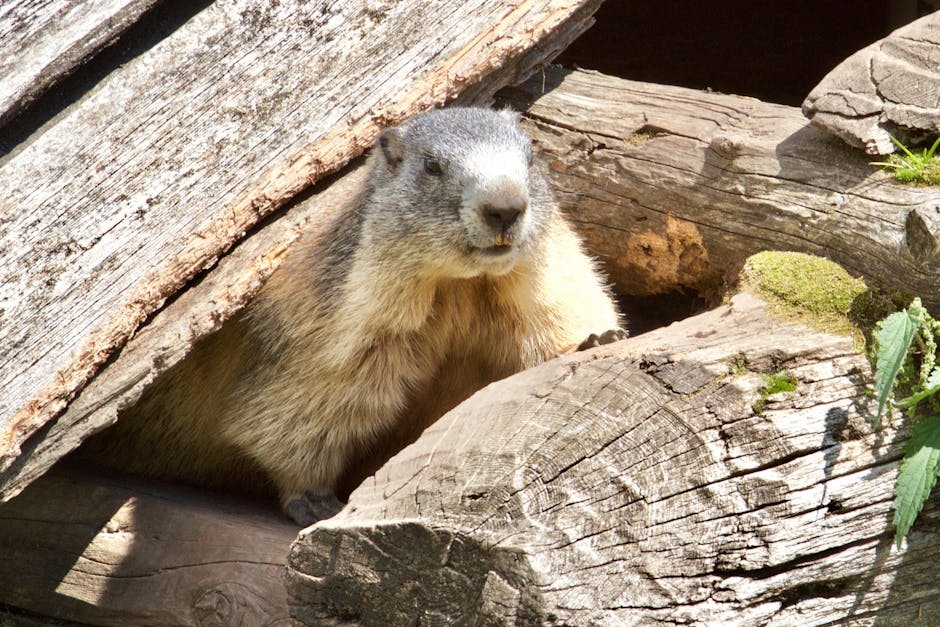
MarmotTopic

Marmot

10 facts

Discover 10 fascinating facts about marmots — the large, sociable ground squirrels that whistle, hibernate for months, and thrive on mountain slopes worldwide.

  • Marmot23 views

    The Olympic Marmot Is Found Only on One Mountain in the World

    The Olympic marmot (Marmota olympus) is endemic to the Olympic Peninsula in Washington State, USA — it exists nowhere else on Earth. Found only above 1,500 meters in the subalpine meadows of Olympic National Park, this species has one of the most restricted ranges of any North American mammal. Climate change is shrinking its alpine habitat, and the species is considered vulnerable by conservation scientists.

  • Marmot20 views

    Some Marmot Species Are Highly Social, Living in Multi-Family Colonies

    While some marmot species are solitary, others like the yellow-bellied marmot and Olympic marmot are highly social. They live in colonies of up to 20 individuals structured around a dominant male, several females, and their offspring. Social bonds are reinforced through greeting behavior — marmots famously touch noses and nuzzle each other upon meeting, strengthening group cohesion vital for surviving long winters together.

  • Marmot22 views

    Marmots Can Carry Bubonic Plague Bacteria

    In Central Asia, marmots — particularly the Tarbagan marmot (Marmota sibirica) — are a natural reservoir for Yersinia pestis, the bacterium that causes bubonic plague. In Mongolia, China, and Russia, eating or hunting sick marmots has caused sporadic plague outbreaks in humans. The 1911 Manchurian plague pandemic, which killed over 60,000 people, was traced to marmot hunting. Today, Central Asian countries maintain monitoring programs and ban the hunting of sick marmots.

  • Marmot19 views

    Marmots Play a Vital Role in Alpine Ecosystems

    Marmots are key ecosystem engineers in mountain environments. Their extensive burrowing aerates and turns over soil, improving drainage and plant growth. They are important prey for golden eagles, wolves, foxes, and bears. Their droppings fertilize the soil. By grazing selectively on alpine plants, marmots also help maintain plant diversity on high-altitude meadows across Europe, Asia, and North America.

  • Marmot17 views

    Marmots Live in Complex Underground Burrow Systems

    Marmot burrows are engineering marvels — they can extend up to 5 meters deep and 15 meters long, with separate chambers for sleeping, hibernation, and waste. Multiple entrances and emergency escape routes are always built. The burrow systems are not abandoned after one season; instead, they are expanded and reused by generations of marmots and also provide shelter to other alpine species like pikas and foxes.

  • Marmot23 views

    The Groundhog Is North America's Most Famous Marmot

    The groundhog, or woodchuck (Marmota monax), is the most well-known marmot species. Every February 2nd, Punxsutawney Phil — a groundhog in Pennsylvania, USA — supposedly predicts the arrival of spring: if he sees his shadow, six more weeks of winter are expected. This 'Groundhog Day' tradition dates back to the 1880s and is now a beloved cultural event attracting tens of thousands of visitors annually.

  • Marmot13 views

    Marmots Use a Loud Whistle to Warn Their Colony of Danger

    Marmots are famous for their piercing alarm whistle, which has earned them the nickname 'whistle pigs' in North America. When a predator — such as an eagle, fox, or bear — is spotted, a sentinel marmot lets out a sharp, loud cry that sends the entire colony diving into burrows within seconds. Different call patterns distinguish aerial threats from ground predators, showing a basic form of communication.

  • Marmot16 views

    Marmots Can Lose Up to Half Their Body Weight During Hibernation

    In preparation for their long winter sleep, marmots spend the entire summer eating voraciously to build up fat reserves — they can nearly double their body weight by autumn. During hibernation, they burn this fat as their sole energy source and can emerge in spring weighing 30–50% less than they did in autumn. This extreme metabolic cycle is one of the most dramatic weight fluctuations of any mammal.

  • Marmot15 views

    Marmots Hibernate for Up to Eight Months of the Year

    Marmots have one of the longest hibernation periods of any mammal, sleeping from September or October until April or May — up to 8 months. During this time their body temperature drops from 37°C to as low as 3°C, their heart rate slows from 100 to just 3–4 beats per minute, and they burn stored fat reserves entirely. The entire colony hibernates together in a sealed, grass-lined burrow.

  • Marmot13 views

    Marmots Are the Largest Members of the Squirrel Family

    Marmots (genus Marmota) are the largest members of the family Sciuridae, which includes squirrels, chipmunks, and prairie dogs. Adult marmots typically weigh between 3 and 7 kg (6.6–15.4 lbs), with some species such as the steppe marmot reaching up to 8 kg. Despite their stocky build, they are agile climbers and runners on rocky mountain terrain.