
Alpha · Android

Help shape Factcovery — keep Premium forever

Join the alpha, lock in lifetime perks before launch.

  • Premium forever
  • Zero ads
  • Live feature drops
Get early access
NeuroscienceTopic

Neuroscience

10 facts

Explore the mysteries of the brain and nervous system! Discover fascinating facts about neuroscience, from neurons to cognition, and unlock the secrets of how we think and feel.

  • Humanbody89 views

    The Human Nose Can Detect Over 1 Trillion Different Scents

    For decades, textbooks stated humans could smell only 10,000 different odours. A landmark 2014 study published in Science overturned this, demonstrating that the human nose can distinguish at least 1 trillion distinct smell combinations. The olfactory system uses about 400 types of smell receptors, and their combination patterns allow an astronomically large number of unique smells. The sense of smell is also the only sense directly connected to the brain's limbic system, explaining why scents so powerfully trigger memories and emotions.

  • Biology54 views

    Octopuses Have Three Hearts, Blue Blood, and Neurons Throughout Their Arms

    Octopuses have three hearts: two branchial hearts pump blood through the gills, while a third systemic heart circulates oxygenated blood to the body. Their blood is blue because it uses haemocyanin (copper-based) rather than haemoglobin (iron-based) to carry oxygen. Most remarkably, about two-thirds of their approximately 500 million neurons are located in their eight arms rather than their central brain, allowing each arm to act semi-independently.

  • Biology33 views

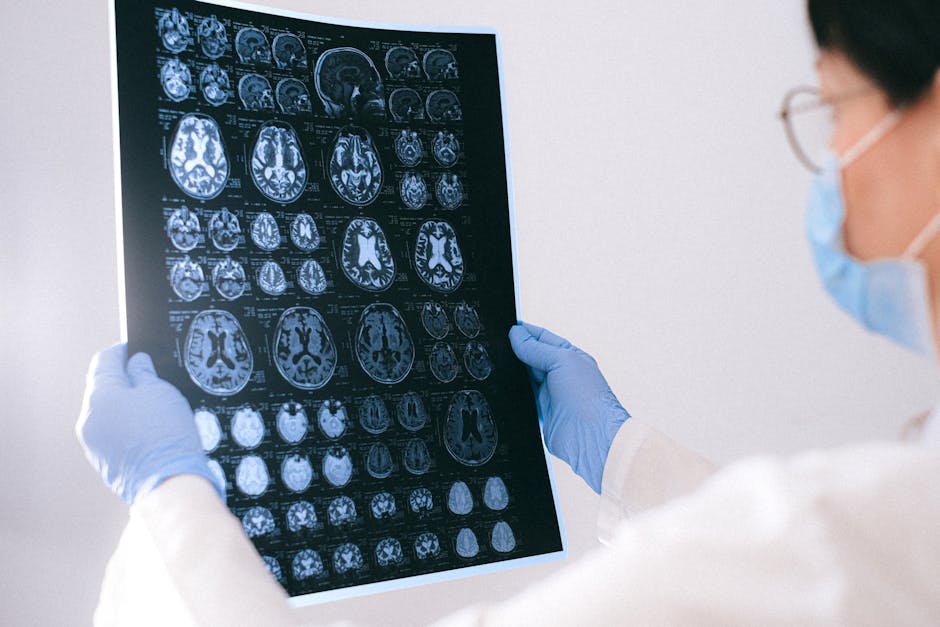
    The Human Brain Has About 86 Billion Neurons With 100 Trillion Connections

    The human brain contains approximately 86 billion neurons — nerve cells that process and transmit information. Each neuron can form thousands of synaptic connections with other neurons, giving the brain an estimated 100 trillion (10¹⁴) synapses. This makes the brain one of the most complex known structures in the universe. Signals travel between neurons at speeds of up to 120 metres per second, and the brain consumes about 20% of the body's energy despite representing only 2% of its weight.

  • Woman78 views

    Women's Brains Are More Interconnected Between Hemispheres

    A landmark 2013 study from the University of Pennsylvania found that, on average, female brains have stronger connections between the left and right hemispheres, while male brains tend to have stronger connections within each hemisphere. This may explain observed differences in performance: women consistently outperform men in memory and social cognition tests, while men tend to perform better on spatial perception tasks. However, most neuroscientists caution that individual variation is far greater than group differences.

  • Fun129 views

    Rats "Laugh" With Ultrasonic Chirps When Tickled

    While inaudible to the human ear, rats emit high-frequency vocalizations (50-kHz chirps) when tickled or engaged in play. These sounds are associated with positive emotional states, similar to human laughter, indicating joy.

  • Scientific98 views

    Smells Are Uniquely Linked to Memory and Emotion

    The olfactory bulb, which processes smells, is directly connected to the amygdala (emotion) and hippocampus (memory) parts of the brain. This bypasses the thalamus, explaining why smells trigger vivid memories.

  • Science101 views

    Your Brain Actively Creates And Distorts Memories

    Memory is not a perfect recording; it's a reconstructive process. Each time you recall an event, your brain actively rebuilds it, often incorporating new information or biases, leading to vivid but inaccurate "false memories."