
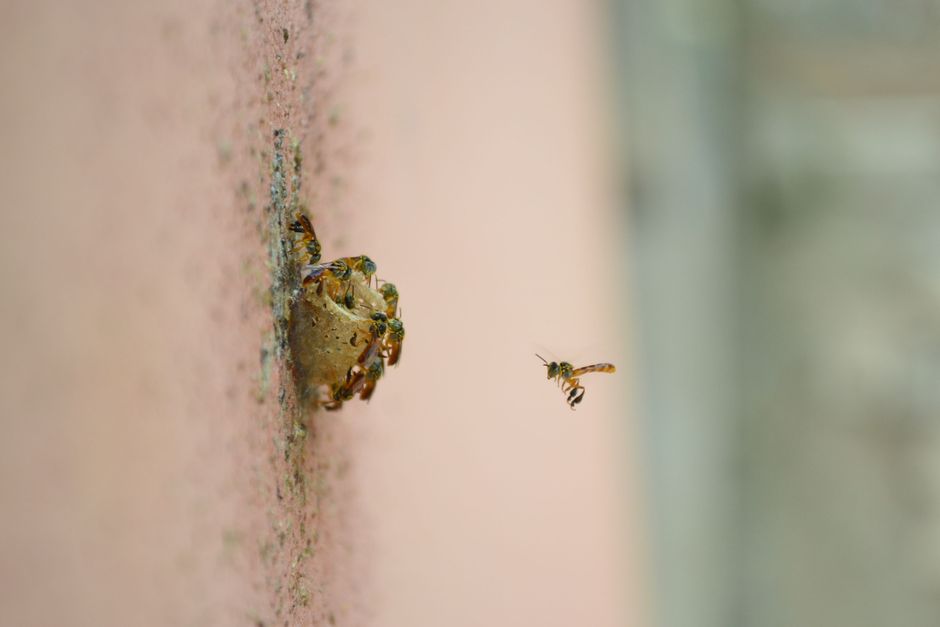
Nine in Ten Bee Species Live Alone Instead of in Hives
Most bees do not live in hives. Of the estimated 20,000 bee species in the world, about 90 percent are solitary, meaning each female builds and stocks her own nest with no queen and no workers to help.
North Dakota State University Extension describes several common groups. Mason bees, genus Osmia, nest in hollow stems, old beetle burrows or bee hotels, sealing off each egg cell with mud walls; the young overwinter as pupae and emerge the following spring. Leafcutter bees, genus Megachile, cut neat circles from leaves or petals to line their nests and carry pollen on the underside of the abdomen. Sweat bees mostly nest in the ground, and carpenter bees dig tunnels in dead wood. Many solitary bees visit more flowers per minute than honeybees, and a few hundred mason bees can pollinate a fruit orchard about as effectively as thousands of honeybees.
And despite their numbers, NDSU notes that solitary bees sting only if handled.
Save or share this fact
A ready-made card for Pinterest, Instagram, a class slide or the family chat.
Why it's true
This fact is drawn from ndsu.edu, a published source you can check yourself:
https://www.ndsu.edu/agriculture/extension/extension-topics/gardening-and-horticulture/pollination/solitary-bees