
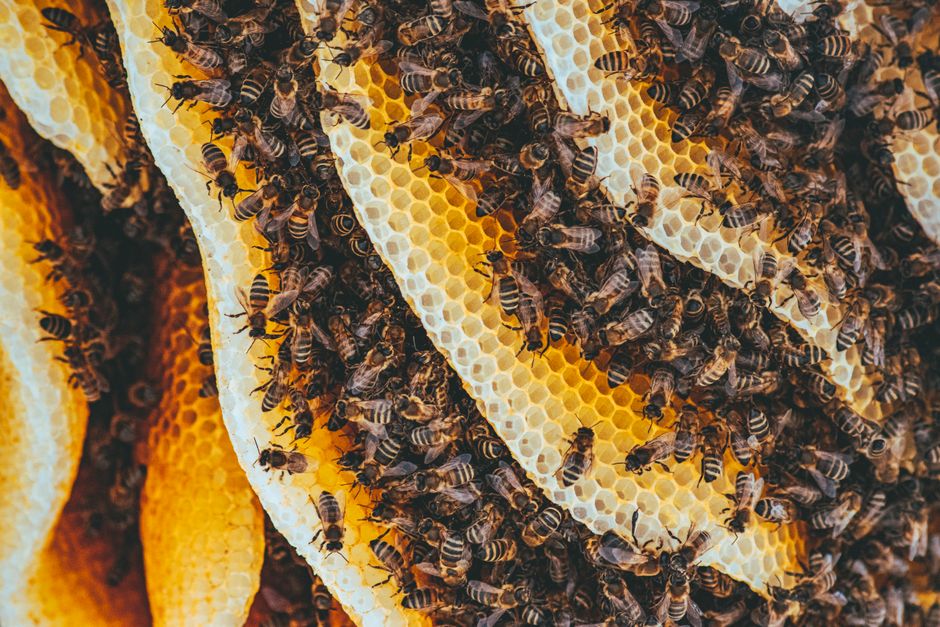
Sleep-Deprived Honeybees Give Sloppier Directions in Their Dances
Honeybees need their sleep to communicate well. A 2010 study found that bees kept awake at night performed waggle dances that pointed their nestmates toward food less precisely than dances by bees that had slept.
Forager honeybees use the waggle dance to tell other bees the direction of nectar-rich flowers. Barrett Klein, then at the University of Texas at Austin, built a magnetic device he called the insominator. Bees wore small metal backpacks, and as the device passed over them during the night, magnets jostled them awake. The angles of their dances, which signal direction, varied more than those of rested bees. As Klein put it, the dance was not necessarily wrong, but it was less precise. The work, with Thomas Seeley of Cornell and Ulrich Mueller of UT Austin, appeared in the Proceedings of the National Academy of Sciences in December 2010.
The researchers expect sloppier dances to send fewer nestmates to good flowers, hurting a colony's foraging.
Save or share this fact
A ready-made card for Pinterest, Instagram, a class slide or the family chat.
Why it's true
This fact is drawn from sciencedaily.com, a published source you can check yourself:
https://sciencedaily.com/releases/2010/12/101213151359.htm