
Food Takes About 24 to 72 Hours to Pass Through the Body
Transit time varies from person to person and depends on diet and health.
 Topic
Topic10 facts
Explore the amazing digestive system! Learn how your body breaks down food, absorbs nutrients, and fuels your life. Discover fascinating facts today.
Transit time varies from person to person and depends on diet and health.
An enzyme called amylase begins turning starch into sugars before food is even swallowed.
These microbes help break down food, make some vitamins and interact with the immune system.
From mouth to anus, the tube that processes food is several times longer than the person it belongs to.
Rhythmic contractions push food through the esophagus and intestines, which is why swallowing works even upside down.
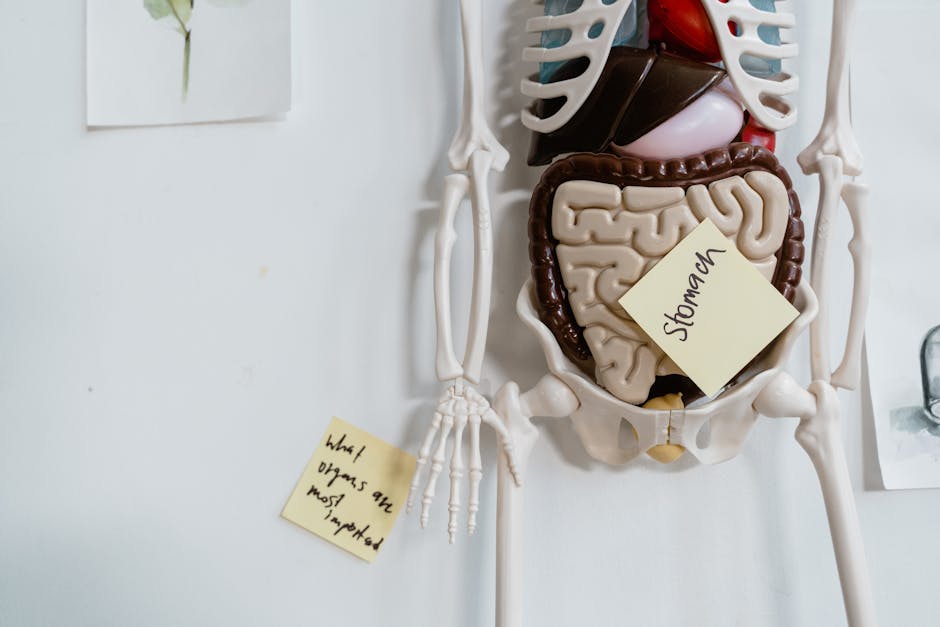
Gastric acid in the stomach reaches a pH of 1.5 to 3.5 — acidic enough to dissolve zinc and corrode certain metals. Yet the stomach doesn't digest itself because mucus-secreting cells continuously coat the stomach wall with a protective bicarbonate-rich mucus layer. This protection is temporary: the stomach completely replaces its inner lining every 3–4 days. If this renewal failed, gastric ulcers would quickly develop, as occurs in H. pylori infections that disrupt the mucus barrier.
Despite being called 'small', the small intestine is the longest section of the digestive tract, measuring 6–7 metres in adults. Its inner surface is covered with millions of finger-like projections called villi, and each villus is covered with even smaller microvilli (the 'brush border'), which together increase the total absorptive surface area to approximately 250–300 square metres — roughly the size of a tennis court. Food takes 2–6 hours to pass through.
The liver is the only internal solid organ capable of complete regeneration. After partial removal or damage, it can grow back to its full size within 8–15 weeks — even if only 25% of the organ remains. This is achieved through hepatocyte proliferation triggered by growth factors like HGF and EGF. The ancient Greek myth of Prometheus — whose liver was eaten by an eagle each day and regrew each night — may reflect early knowledge of this ability. The liver also performs over 500 distinct metabolic functions.
The sign is linked to the intestines, stomach, and overall gut health, emphasizing an innate focus on purity and well-being. This connection often translates into a keen awareness of diet, nutrition, and a preference for natural remedies.
The enteric nervous system (ENS) in your digestive tract contains over 100 million neurons, operating independently of the central nervous system. It directly impacts mood, stress, and overall well-being, earning it the nickname "second brain."