
Some Mice Build Complex Burrows
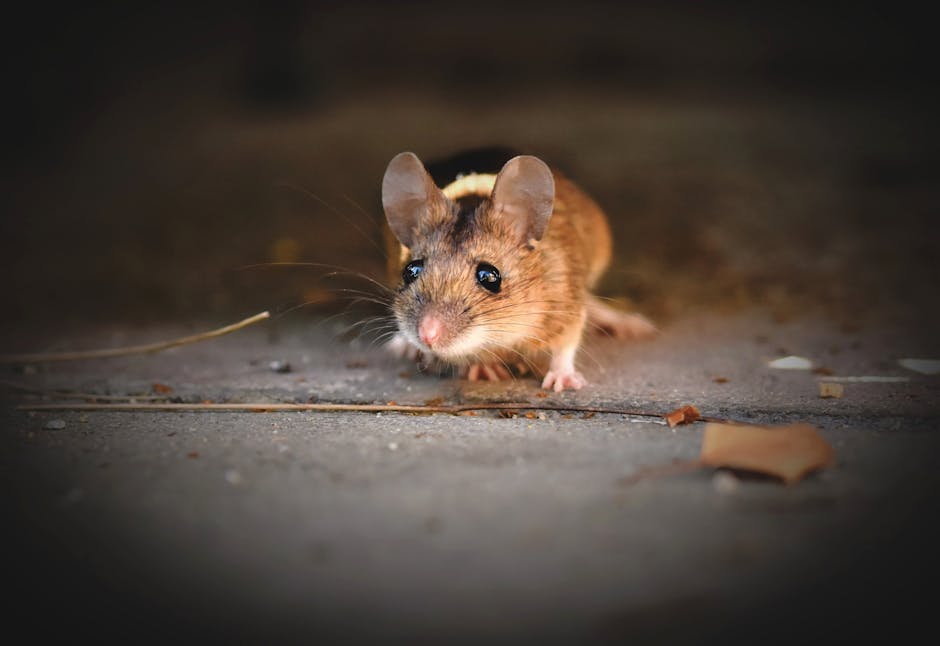
Many wild mice do more than hide under debris—they dig tunnels with nesting chambers and food storage spots. These micro-homes improve survival against weather and predators.
 Topic
Topic20 facts
Mice are tiny, adaptable rodents found almost everywhere, known for sharp senses, fast breeding, and outsized roles in science and culture.
Many wild mice do more than hide under debris—they dig tunnels with nesting chambers and food storage spots. These micro-homes improve survival against weather and predators.
A mouse can distinguish between different individuals using scent signatures. This helps them track family, rivals, and mates in environments where vision is limited.
Newborn mice, called pups, start life pink, blind, and nearly helpless. They develop fur and open their eyes only after several days, growing fast in the nest.
Wild mice usually run farther, climb better, and react faster than domesticated strains. Living under constant predation pressure shapes sharper survival behaviors.
Early mouse breeding experiments helped researchers understand inheritance, mutations, and disease. Entire research fields in immunology and cancer biology grew around mouse models.
Mice are strong spatial learners and can remember routes after repeated trials. That ability is why maze experiments became classic tools in psychology and neuroscience.
The cartoon stereotype is misleading: mice often prefer grains, seeds, or sweet foods over cheese. Their actual food choices depend more on smell, safety, and opportunity than myth.
Mice hear frequencies far above the human range, including ultrasonic sounds. This lets them communicate privately and detect subtle environmental cues that we completely miss.
Research has shown mice may react differently when familiar mice are in pain. These findings have helped scientists explore the biological roots of social behavior and empathy.
A resting mouse heart can beat hundreds of times per minute. That rapid metabolism is one reason mice eat often and have much shorter lifespans than larger mammals.