
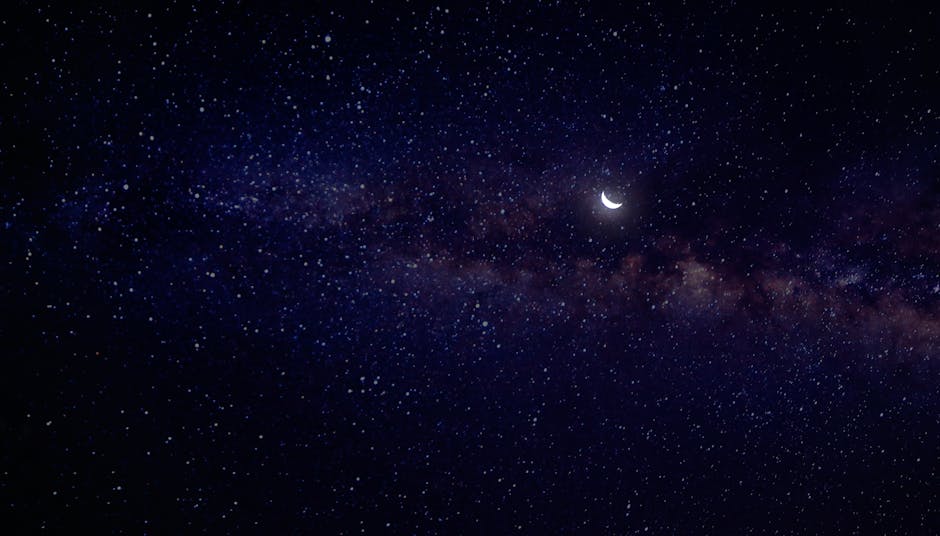
Night Sky
Topic

Night Sky

9 facts

Explore the wonders of the night sky! Discover fascinating facts about stars, planets, galaxies, and celestial events that illuminate our universe.

  • Pisces58 views

    The Pisces Constellation Is Home to the "Circlet" Asterism

    Within the faint constellation of Pisces lies a distinctive asterism called "The Circlet," a small group of stars forming a circle or oval shape. Located near the western fish, this feature is often used by stargazers to identify the constellation.

  • Aquarius54 views

    Aquarius Ranks as the Tenth Largest Constellation in the Night Sky

    Covering an expansive area of 980 square degrees, Aquarius is a significant celestial landmark. Its vastness allows it to host numerous deep-sky objects, though many are faint and require telescopes to observe.

  • Sagittarius110 views

    Sagittarius Is One Of The Last Constellations To Set In Winter

    For observers in the Northern Hemisphere, Sagittarius is a summer constellation, making its appearance low in the southern sky. However, as the seasons progress into winter, it is one of the last zodiac constellations visible before disappearing below the horizon.

  • Sagittarius43 views

    The Constellation Sagittarius Is Best Viewed From The Southern Hemisphere

    Due to its southerly declination, the Sagittarius constellation appears highest in the sky and is most visible from locations in the Southern Hemisphere. From northern latitudes, it remains relatively low on the horizon, making its observation more challenging.

  • Sagittarius45 views

    The Constellation Sagittarius Contains The Famous 'Teapot' Asterism

    While not an official constellation, the 'Teapot' is a widely recognized asterism formed by eight bright stars within Sagittarius. This distinct shape makes it relatively easy to locate the constellation in the night sky, particularly in the Northern Hemisphere's summer.

  • Scorpio46 views

    The Constellation Scorpius Resembles A J-Hook Or Fish Hook

    While commonly seen as a scorpion with a curved tail, its distinctive shape is also frequently described as a J-hook or a fish hook in various cultures. This makes it one of the most easily identifiable constellations in the night sky, especially in the Southern Hemisphere.

  • Virgo Zodiac45 views

    The Virgo Constellation is the Second-Largest in the Night Sky.

    Spanning over 1294 square degrees, it's surpassed only by Hydra. This vast celestial presence underscores the sign's expansive capacity for detail and its significant role in the zodiacal tapestry, often containing numerous galaxies.

  • Taurus50 views

    The Hyades, the Closest Open Star Cluster to Earth, Forms the Head of Taurus.

    This V-shaped cluster of hundreds of stars is estimated to be 625 million years old and is visible without a telescope. It's a key feature that helps locate the Taurus constellation in the night sky.

  • Taurus45 views

    Aldebaran, Taurus's Brightest Star, Is a Red Giant 400 Times Brighter Than the Sun.

    This orange-hued star is not physically part of the Hyades star cluster, which it appears to dominate, but lies much closer to Earth. It's easily visible to the naked eye, marking the bull's eye.